
- Home
- Dog Jumping on People
Dog Jumping on People When They Walk In Stopping It for Good
At Topanga Pet Resort, we help dogs develop calmer greeting habits through structured training that teaches them what to do instead of simply telling them what not to do.
119+
Yelp Reviews
132+
Google Reviews
6
Certified Trainers
119+
Yelp reviews
132+
Google Reviews
6
Certified Trainers

119+ reviews

Based on 132 Google Reviews
6
Certified Trainers
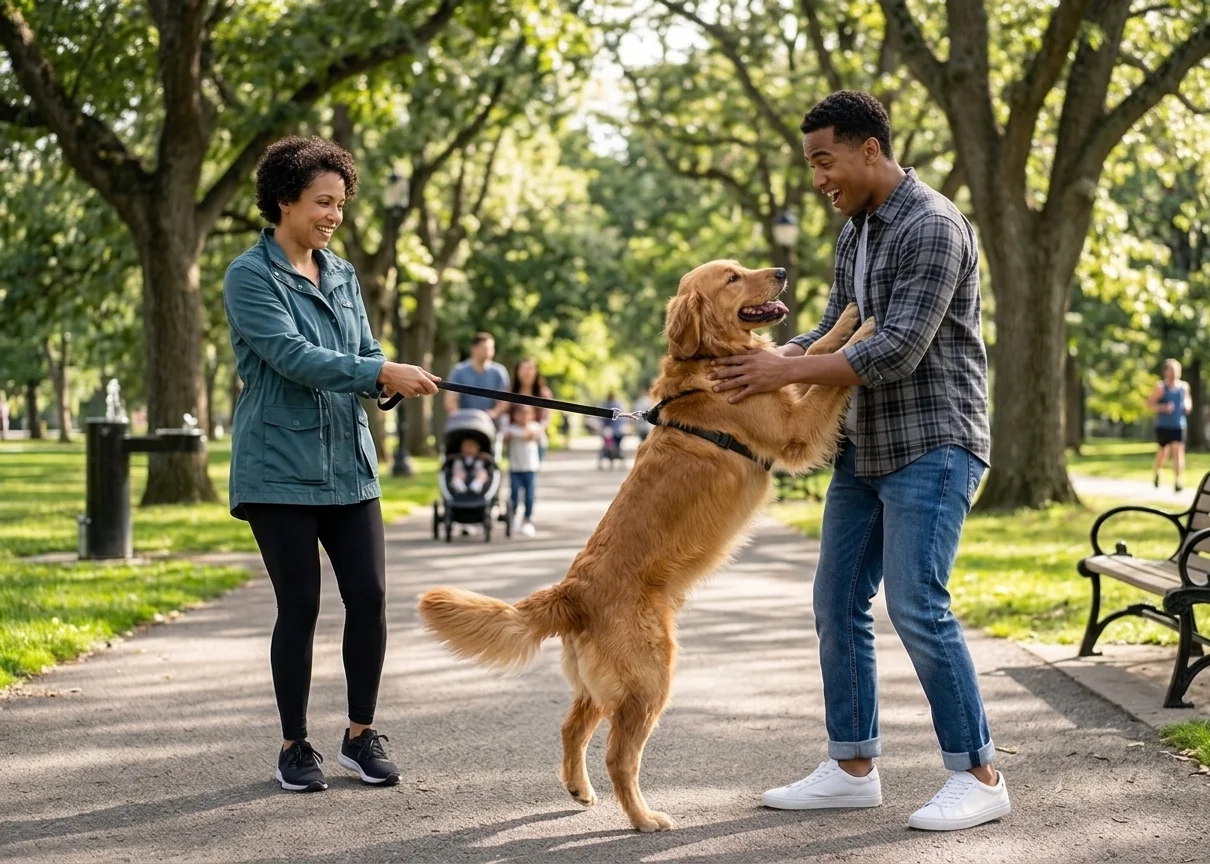
If your dog jumps on people the moment they walk through the door, you already know how quickly a friendly greeting can turn into a frustrating situation.
Your dog may be excited to see someone, but guests don’t always appreciate muddy paws on their clothes. A large dog can scratch someone, knock over a child, or cause an older guest to lose their balance. Even smaller dogs can make visitors uncomfortable when they repeatedly jump, bark, or climb onto people.
The good news is that jumping is a learned greeting behavior, which means it can be changed.
Why Dogs Jump When Greeting People
Jumping usually has a straightforward explanation: your dog has learned that jumping gets a reaction.
Dogs naturally want to interact with people at face level. When they jump up, they get attention, eye contact, touching, talking, or even laughter.
From your dog’s perspective, that can be a very successful greeting.
Excitement and Reinforcement History
Excitement is one of the most common reasons dogs jump.
The pattern may look like this:
Someone approaches the door.
Your dog becomes excited.
The door opens.
Your dog rushes toward the person.
Your dog jumps.
The visitor talks to or touches the dog.
The dog learns that jumping is part of the greeting routine.
Even telling your dog “No!” can accidentally reinforce the behavior if your dog receives attention every time they jump.
That’s why stopping dog jumping isn’t simply about correcting the moment your dog’s paws leave the floor. Your dog needs to learn a better greeting behavior.
What You Are Accidentally Teaching Your Dog
Most owners aren’t intentionally encouraging jumping. The problem is that dogs learn from consequences, not from what we intended to communicate.
Common Owner Mistakes
One of the biggest mistakes is having different rules for different situations.
For example, you may ignore your dog when they jump on a guest but allow them to jump on you when you come home.
To your dog, the rule becomes confusing.
Other common mistakes include:
pushing the dog away
grabbing the dog’s front legs
yelling repeatedly
petting the dog while they’re jumping
allowing guests to greet an overexcited dog
opening the door while the dog is already rushing forward
expecting a dog to remain calm without teaching an alternative behavior
Consistency matters because every greeting becomes a training opportunity.
Why Knee-to-Chest and Other Old Methods Fail
You may have heard advice to knee your dog in the chest, step on the leash, yell, or physically push the dog away.
These methods focus on stopping the visible behavior without necessarily teaching the dog what to do instead.
Behavioral Science Has Moved Beyond Physical Corrections
A dog that jumps because they’re excited still needs an appropriate way to greet people.
Punishment can also create additional problems if a dog becomes confused, frustrated, or worried about the person approaching.
Instead of making the greeting unpleasant, effective training changes the pattern:
Calm behavior gets access to the person. Jumping makes the interaction pause.
That gives the dog information they can actually use.
Teaching a Reliable Alternative Greeting
The most useful question isn’t just “How do I stop my dog from jumping?”
It’s: “What should my dog do when someone arrives?”
The Foundation Skill
A reliable greeting might look like this:
The door opens. Your dog remains on the floor. They look toward the visitor, wait for permission to approach, and receive attention while keeping all four paws down.
For some dogs, a sit works well. For others, going to a mat or simply standing calmly is more realistic.
The best alternative depends on your dog’s temperament, impulse control, and level of excitement.
Practice Before Real Guests Arrive
Start in low-pressure situations.
Have a family member approach the door, knock, enter, and leave while you practice the desired behavior.
Gradually increase the difficulty.
Once your dog can remain calm around familiar people, introduce new visitors and more exciting situations.
This is much easier than trying to teach everything during a busy dinner party with six people standing in the doorway.
Why Topanga Pet Resort Can Help
50+
50+ Years of Combined Experience
6
Certified trainers
5–6
Hours of Supervised Play
6.5
Acres to explore
Topanga Pet Resort provides professional dog training and boarding in the peaceful hills of Topanga Canyon, serving dog owners throughout Los Angeles, Woodland Hills, Calabasas, Malibu, Santa Monica, Pacific Palisades, Sherman Oaks, Westwood, and nearby communities.
Our training programs are individualized around your dog’s personality, behavior, and learning pace.
With 563 happy clients, 627 trained dogs, 12 professionals, and 9+ awards, our team brings extensive experience to everyday behavior challenges.
With more than 50 years of combined experience and 6 certified trainers, we provide a structured environment where dogs can practice impulse control, obedience, and calm social behavior. Our large indoor and outdoor facility, scenic Los Angeles country setting, premium care, and 5 to 6 hours of supervised activity give dogs plenty of opportunities to build better habits under professional guidance.
The goal isn’t to make your dog less friendly.
It’s to help your dog understand that being calm is part of saying hello.
Start Building Better Greeting Manners
If your dog jumps on people every time someone walks through the door, you don’t have to keep apologizing to every guest who visits.
With consistent training, your dog can learn that greetings don’t have to mean jumping, barking, or scrambling for attention.
Work on Greeting Manners at Topanga Pet Resort and give your dog a clearer, calmer way to welcome people.
What If Your Dog Jumps on Guests?
If your dog jumps on guests, don’t turn the arrival into a wrestling match.
Instead:
- Create distance before opening the door.
- Ask your dog for the trained alternative behavior.
- Keep the greeting calm.
- Reward four paws on the floor.
- Pause interaction if jumping begins.
- Resume the greeting when your dog settles.
Everyone who regularly visits your home should follow the same rules.
One guest who enthusiastically rewards jumping can undo several successful training sessions.
Why Some Dogs Need Professional Help
Some dogs learn greeting manners quickly.
Others become so excited around visitors that they can’t think clearly enough to respond to basic cues.
When DIY Training Hits a Wall
Professional help is worth considering when:
- your dog repeatedly jumps despite consistent practice
- your dog knocks people over
- jumping is accompanied by barking or nipping
- your dog becomes uncontrollable when the doorbell rings
- children or elderly guests are at risk
- your dog cannot focus around visitors
- you’ve tried several approaches without meaningful improvement
A professional trainer can identify what is maintaining the behavior and adjust the training environment so your dog can succeed.
The Four Corners of Stopping Dog Jumping
A reliable plan combines prevent, redirect, reward, and repeat.
Prevent
Don't allow your dog to rehearse the behavior over and over. Before guests arrive, you can use a leash, gate, crate, or designated resting area to create enough distance for your dog to remain under control. Management isn't the final solution, but it gives you a chance to train without letting every visitor become another jumping rehearsal.
Redirect
Teach your dog what you want them to do instead. That could be: sitting, standing calmly, going to a mat, waiting near the doorway, looking at you. The replacement behavior should be simple enough for your dog to perform even when excited.
Reward
Calm behavior should produce the thing your dog wants most: access to the person. If your dog sits and keeps four paws on the floor, the guest can approach and interact. If your dog jumps, the greeting pauses. This teaches a clear relationship between behavior and outcome.
Repeat
Dogs don't develop reliable greeting manners after one successful interaction. Practice with different people, different levels of excitement, and different environments. Over time, your dog begins to understand that calm behavior is the fastest way to receive attention.
Comprehensive dog boarding & training at Topanga Pet Resort
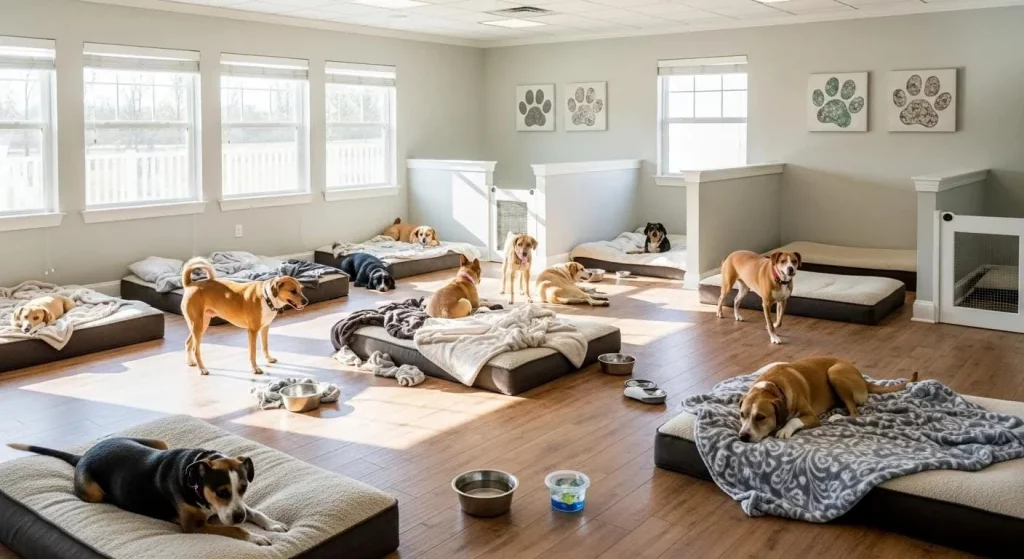
Dog Boarding
Offers a comfortable and safe overnight stay with attentive 24/7 care to make your pet feel right at home.
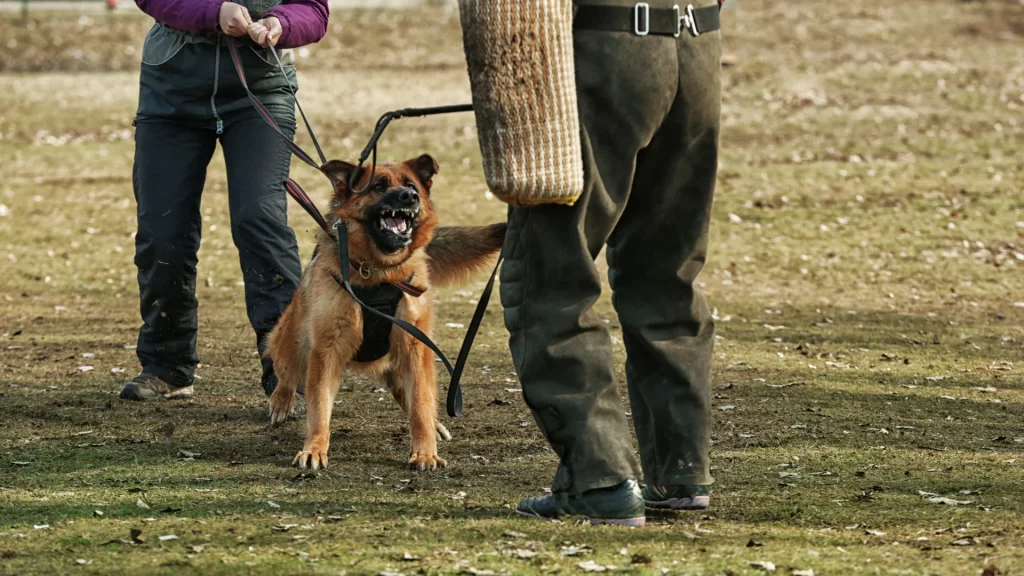
Board & Train
Combines immersive boarding with structured training to instill reliable real-world obedience and good habits.
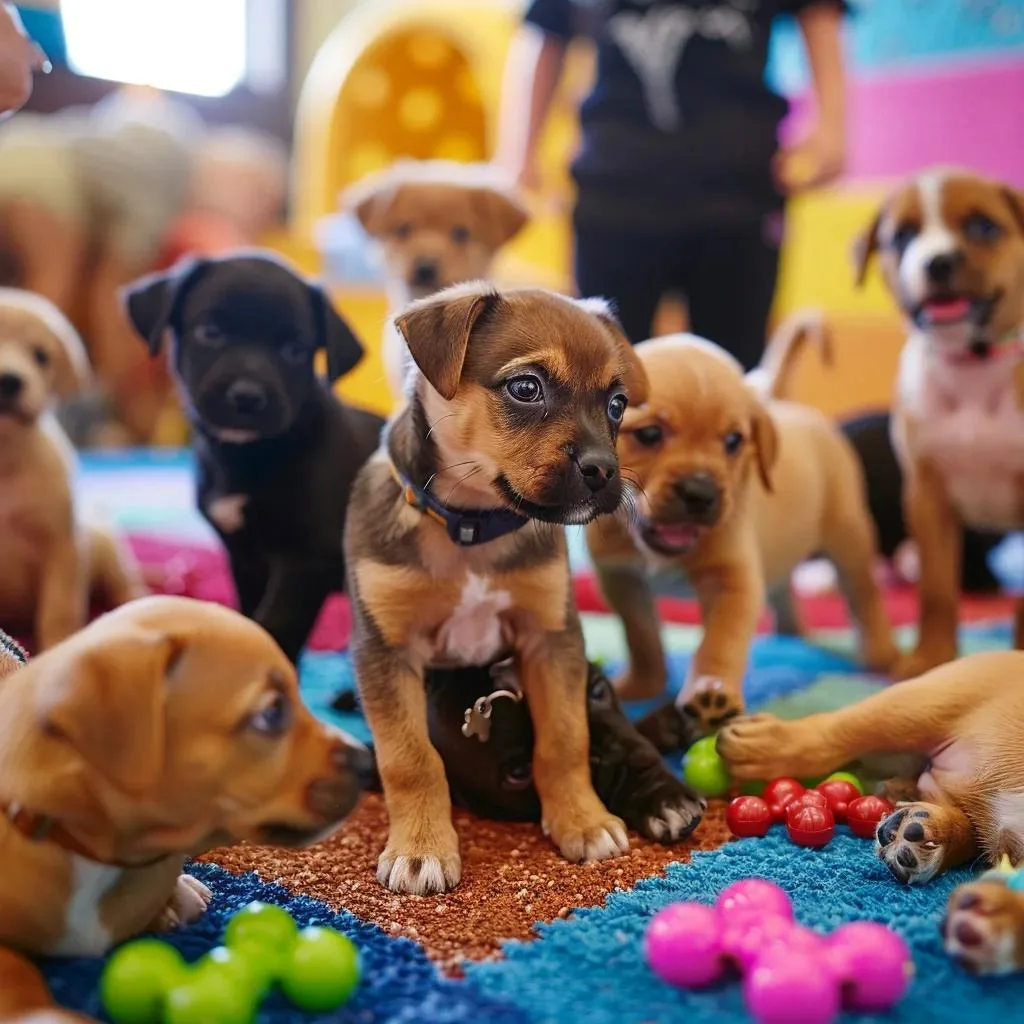
Puppy Training
Covers housebreaking, biting, and basic obedience to build a strong foundation for a well-behaved dog.
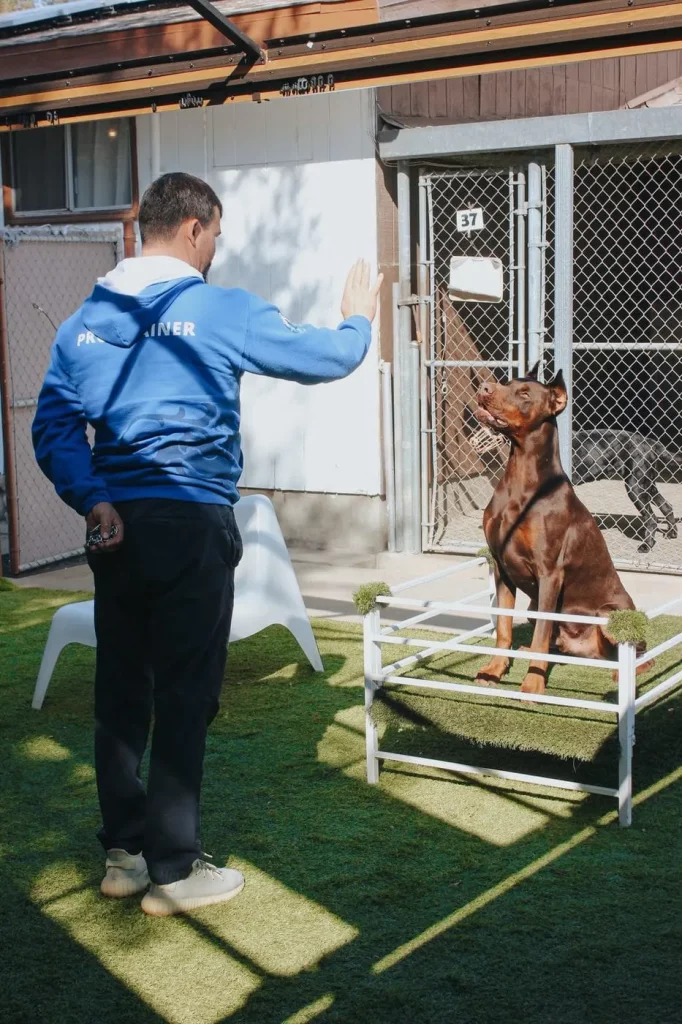
Obedience & Behavior Modification
Provides expert behavioral modification to safely manage triggers, eliminate dangerous reactivity, and build reliable control in public spaces.
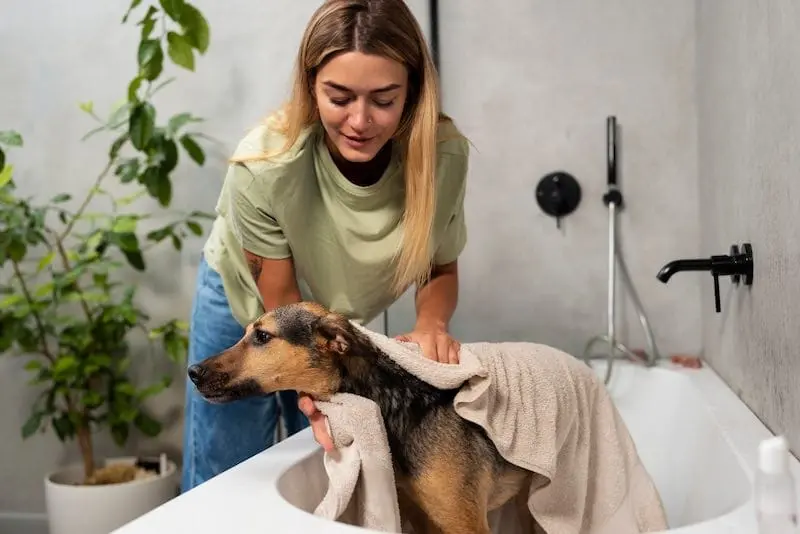
Daycare / Grooming
Provides supervised daytime play and professional grooming services to keep your dog happy and clean.
Dog Boarding
Enjoy comfortable overnight boarding with attentive care, private accommodations, and plenty of supervised activity.
Board & Train
Combines comfortable boarding with structured training to build reliable real-world obedience and better everyday habits.
Puppy Training
Builds a strong foundation through house training, bite inhibition, socialization, and basic obedience.
Obedience & Behavior Modification
Addresses reactivity and challenging behaviors through structured training, trigger management, and reliable real-world obedience.
Daycare & Grooming
Combines supervised daytime activity with professional grooming and bathing services to keep your dog comfortable, active, and well cared for.
What Dog Parents Are Saying
EXCELLENTTrustindex verifies that the original source of the review is Google. This is the best dog camp my dogs love coming here. The staff are very professional.Posted on GoogleTrustindex verifies that the original source of the review is Google. What a place! My wife and I visited a dear friend's dog at Topanga Pet Resort this past weekend. When we encountered Ivy, a precious 2 year old Pitty, she seemed very relaxed and well fed. We found the boarding facility to truly feel like a resort. The surrounding trees and ample greenery make the place very serene. All the dogs that were being housed and those who were coming in for training seemed genuinely happy to be there. Additionally, we met a couple of the trainers during our visit there and they were extremely knowledgeable and compassionate towards their canine friends. If you need a place to take your furry friend, Topanga Pet Resort is the place!Posted on GoogleTrustindex verifies that the original source of the review is Google. Our experience with Topanga Pet Resort was absolutely amazing. We were thoroughly impressed with how they handled everything from start to finish. The staff was kind, professional, attentive, and genuinely cared about our pet’s comfort and well-being. The facility was clean, organized, and gave us peace of mind the entire time. Communication was excellent, and it was clear our pet was being treated with love and attention. It’s hard to find a place you can fully trust with your fur baby, but this team truly exceeded expectations. We will definitely be returning and highly recommend them to anyone looking for quality pet care!Posted on GoogleTrustindex verifies that the original source of the review is Google. This is my 2nd time using them. First time was for 6 weeks and it went so well I went back for a 3 week stay for my two dogs. They are great at training puppy's, taking care of my big dog, and most importantly training my wife on how to walk a dog ;)Posted on GoogleTrustindex verifies that the original source of the review is Google. We boarded our first dog for over 15 years when we were out of town. We're excited to begin boarding/ training there with our new rescue puppy.Posted on GoogleTrustindex verifies that the original source of the review is Google. They did such a great job! My daughters dog had been so consistent since his training! Well worth the money!Posted on GoogleTrustindex verifies that the original source of the review is Google. Amazing place to take your pet! We met with them for a meet and greet since our dog is pretty nervous around new people and has never been left, but they did everything they could to make sure he was comfortable, didn’t push his boundaries and took their time thoroughly answering all of our questions! They do a great job of meeting every individual pup’s needs and have excellent trainers on the property at all times! I can definitely feel good about bringing my dog here for boarding ❤️ prices are also very reasonable and they give lots of outside timePosted on GoogleTrustindex verifies that the original source of the review is Google. Topanga Pet Resort — absolute love🥰 I can say with full confidence: these people REALLY know what they’re doing. I’ve left my dog Chuck there several times, and every time he comes home happy, calm, and full of good energy — like he spent time with friends, not just in a boarding facility. They don’t just watch the dogs, they train them, guide them, and do it with heart. You can feel how much respect and care they give to every animal. We also use their grooming regularly, and Chuck always comes out looking like a handsome glossy boy — fresh, clean, and proud of himself. I fully trust them. This place is honestly the best thing I’ve found for my dog. Thank you for caring for Chuck as if he were your own. ❤️❤️❤️Posted on GoogleTrustindex verifies that the original source of the review is Google. We have had our dog stay here for several week long stays and have had good experiences! They have a large outdoor area for the dogs to play. They also can accommodate any food requirements and special servicesVerified by TrustindexTrustindex verified badge is the Universal Symbol of Trust. Only the greatest companies can get the verified badge who has a review score above 4.5, based on customer reviews over the past 12 months. Read more
See Exactly What Boarding & Training Costs
Boarding rates, Board & Train packages, and add-ons — all clearly outlined.
Frequently Asked Questions
Everything you need to know before your dog’s first stay or Training Assessment.
Have questions? Give us a call
+1 888-818-1622
What causes behavioral problems in dogs?
Behavioral issues can develop from many factors, including fear, anxiety, genetics, past experiences, lack of socialization, stress, or environmental triggers. A professional assessment helps identify the reasons behind your dog’s behavior.
Is behavior modification different from training?
Yes. Traditional training often focuses on obedience and commands, while behavior modification addresses emotional responses, triggers, fears, and deeper behavioral challenges.
How long does behavior modification take?
The timeline depends on the dog’s behavior, history, triggers, environment, and consistency of training. Some dogs may show progress quickly, while others require a longer structured approach.
Can behavioral issues be cured or just managed?
Many behavioral issues can improve significantly with the right approach, but some dogs may require ongoing management. The goal is to create safer, more predictable behaviors and improve quality of life.
Is my anxious or reactive dog dangerous?
Not necessarily. Reactivity and anxiety do not always mean a dog is dangerous. A professional evaluation helps determine what is causing the behavior and what training approach is appropriate.
Have Questions? Give Us a Call
+1 888-818-1622
Ready to Start Your Dog’s Training Program?
Have questions about our training programs? Fill out the form below and our team will get back to you shortly.